I’ve always been a foodie. Not the eat-in-my-car-for-likes kind of foodie; I’m talking about being a native Houstonian who, back in high school, would drive to that one international grocery store on the northside just to explore. It’s my first taste of Roti and bean curd. It didn’t come from a trendy food truck or a curated social media feed—it happened at my friend Tyabba’s house, watching her mother roll out dough fresh from scratch.
Decades later, I’ve watched Houston’s culinary scene explode into a diversified, decadent foodscape that has a little pinch of all our communities sprinkled in and celebrated worldwide. In many ways, the culinary scene feels like one of the few spaces where our intersecting cultures are truly celebrated. But when people talk about what immigrants contribute to Texas agriculture, they often land on traditional farm labor and stop there.
The raw, unfiltered truth? We aren’t buying or eating breakfast, lunch, or dinner without immigrants.
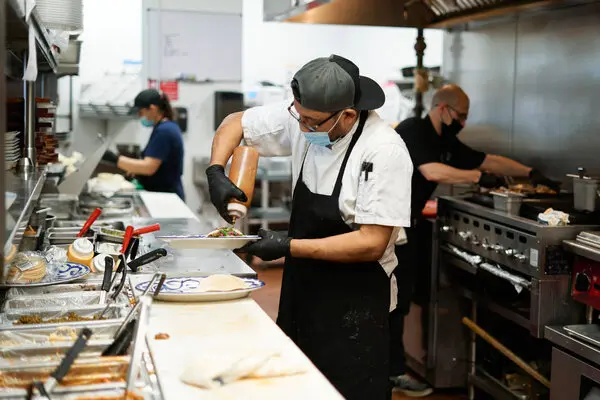
Look at your favorite local hidden gem—the spot with an Abuelita working in the back of the house, or an Igbo Auntie mixing spices from recipes passed down through multiple generations. Now look at your go-to family-style chain. When you pull up on a Friday at 5:00 PM and a place like Los Cucos—which usually has a 45-minute wait—looks like a ghost town, you might initially get excited about the fast seating. Then the economic reality hits: if the big chains are starving for labor, the cultural food spots that anchor our communities are already on life support.
That is precisely why the American Immigration Council’s From Field to Fork panel—powered by Amegy Bank—arrived at such a critical moment in history. The briefing brought together a rare, bipartisan coalition of corporate executives, legal minds, and culinary advocates to dive into the data regarding the fork in the road that sits between the food sector and our regional economy.

Inside the Data
The American Immigration Council’s dynamic 2026 From Field to Fork: Economic Impact of Immigrants on Texas Food Industry Report lays bare the exact metrics of our reliance. This isn’t just about agriculture in the traditional sense; it is a pipeline stretching from the soil to the back of the house to our forks.
| Industry Metric | The Hard Texas Data | The Systemic Fallout |
| Workforce Footprint | 400,500 immigrant workers make up 24.9% of the total food sector. | Nearly a quarter of the entire food supply chain collapses without foreign-born labor. |
| Economic Output | Agriculture, food processing, and food services generated $102.6 billion in economic output in Texas. | Texas agriculture drives $6.5 billion in global exports; labor shortages freeze state GDP. |
| The Legal Paradox | 14.5% of the workforce is undocumented, including 20,100 DACA-eligible individuals. | Critical frontline workers face constant deportation threats while keeping the state fed. |
| The Meat Processing Bottleneck | Immigrants comprise 49.1% of all butchers and meat processing workers nationwide. | The entire meat-packing industry is a structural choke point that stalls instantly without immigrant hands. |
As Chelsie Kramer, Texas State Organizer for the American Immigration Council, said in so many words during her opening presentation, these figures underscore a reality that Texas employers have known firsthand for generations: remove one piece of this puzzle, and the consumer feels it almost immediately.
How Politics Entered the Kitchen
“All God’s people came to Houston, and they brought their food with them,” stated Steve Kean, President and CEO of the Greater Houston Partnership. While Kean acknowledged that rigorous border control is an operational necessity for any democracy, he issued a direct warning regarding the economic catastrophe of mass deportation policies on Texas agribusiness.
The operational paralysis is already playing out inside our neighborhoods. Mike Shine, Executive Director of the Greater Houston Chapter of the Texas Restaurant Association, made it plain: “When you look at the industry, we have a real policy problem. The reality of who is doing the work versus what the official paperwork says creates a massive operational challenge for operators across the state.”
When aggressive immigration enforcement sweeps hit a metro area, the psychological trauma reshapes the entire local economy. Catarina Bill, Chief Mission Officer for the Houston-based Southern Smoke Foundation—which directs nationwide emergency relief and the free mental health program Behind You for service workers—detailed the invisible domino effect.
It creates a climate of fear. Workers avoid shifts to evade surveillance, leaving restaurants in an immediate staffing fire. Simultaneously, terrorized families stay home rather than risk dining out in public spaces. Even patrons unaffected avoid the restaurants simply because they just do not want to see what deportation actually looks like. The result? A compounding downward spiral of understaffed kitchens, terrible wait times, scaled-back or up concepts, with closures being the last domino to fall.
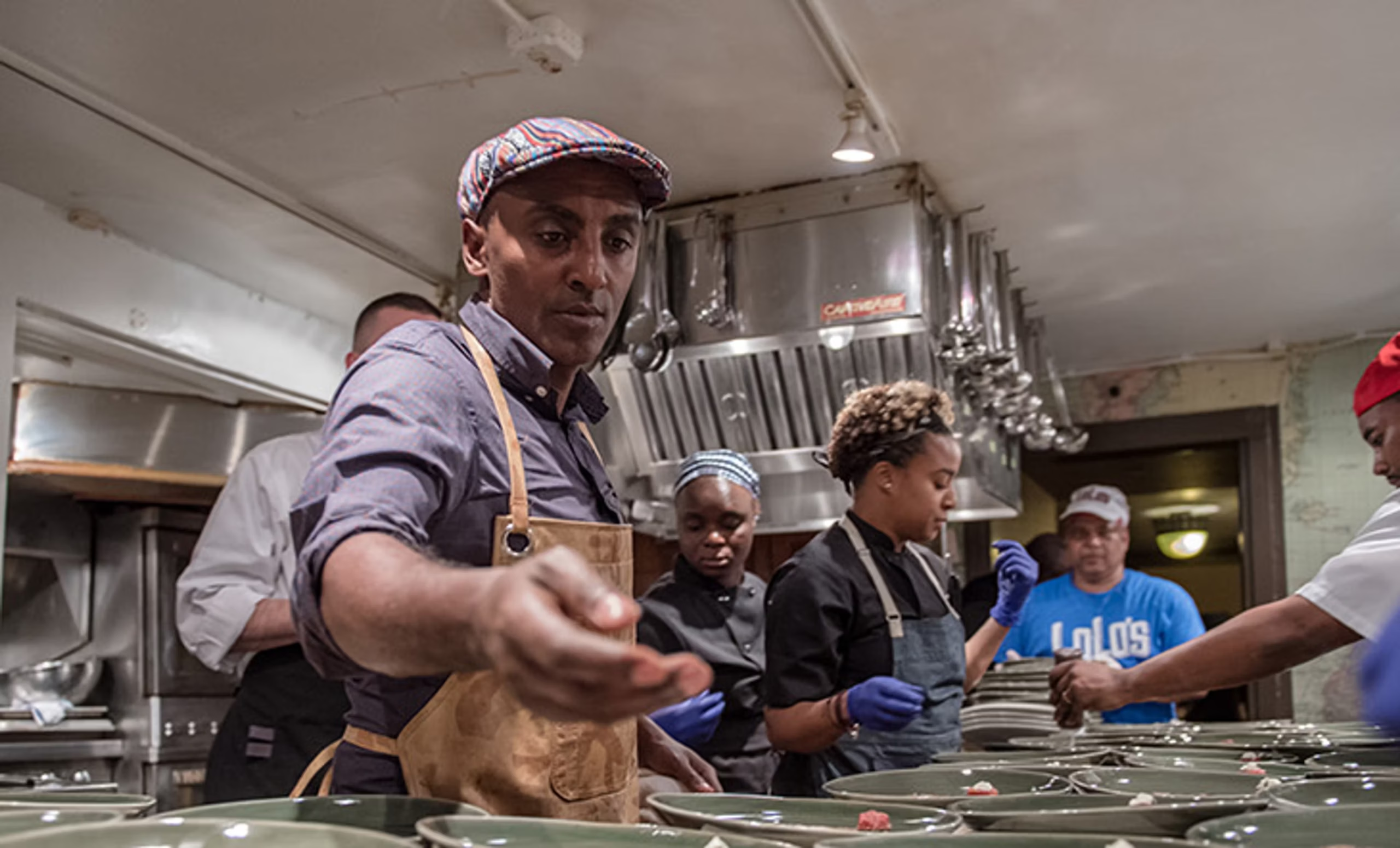
For the older generations who remember an era of predictable inflation and stable grocery bills, the current marketplace makes no sense. But you cannot separate the price of a plate from the human beings processing it.
The James Beard Foundation, represented on the panel by Vice President of Impact Dr. Anne McBride, is actively pushing the culinary world to redefine what “sustainability” actually means. It is no longer just about buying organic or reducing carbon footprints—it is about labor dignity and federal policy. The resilience of the American kitchen is tethered to the legal status and protections of its foundational workforce.
Houston’s legal expert and immigration attorney Jacob M. Monty highlighted that our archaic, decades-old legal frameworks completely fail to provide the streamlined, lawful visa channels that employers desperately need to staff frontline roles. According to the council’s Map the Impact database, immigrant Texans contribute tens of billions in federal, state, and local taxes every year. They are not drains on the system; they are active investors in our collective stability.

To protect American consumers from soaring menu costs and structural grocery shortages, the country must look past partisan echo chambers. Texas became ground zero for mass deportations under Operation Lone Star. Let us also take the lead in securing our tables by demanding federal, bipartisan immigration reform.
The next time you enjoy a meal, whether dining out or cooking at home, look at the plate. Remember that a stable, thriving food supply chain relies entirely on the very human beings currently caught in a broken political crossfire. It is time for Texans to champion proactive, humane policies that secure our tables, protect our workforce, and fuel our future.
Our sustainability depends on it.
The From Field to Fork report is available to the public. To dive deeper into the data or access other referenced material, visit:
• From Field to Fork: The Economic Impact of Immigrants on Texas’ Food Industry
• Map the Impact — an interactive tool highlighting how immigrants contribute to states, metro areas, counties, and congressional districts across the country
• Restoring Credibility and Humanity: A New Framework for Immigration Enforcement — Special Report
About the American Immigration Council:
The Council brings together problem solvers and employs four coordinated approaches to advance change—litigation, research, legislative and administrative advocacy, and communications. With this synergy, the Council works to advance positive public attitudes and create a more welcoming America—one that provides a fair process for immigrants and adopts immigration laws and policies that take into account the needs of the U.S. economy.