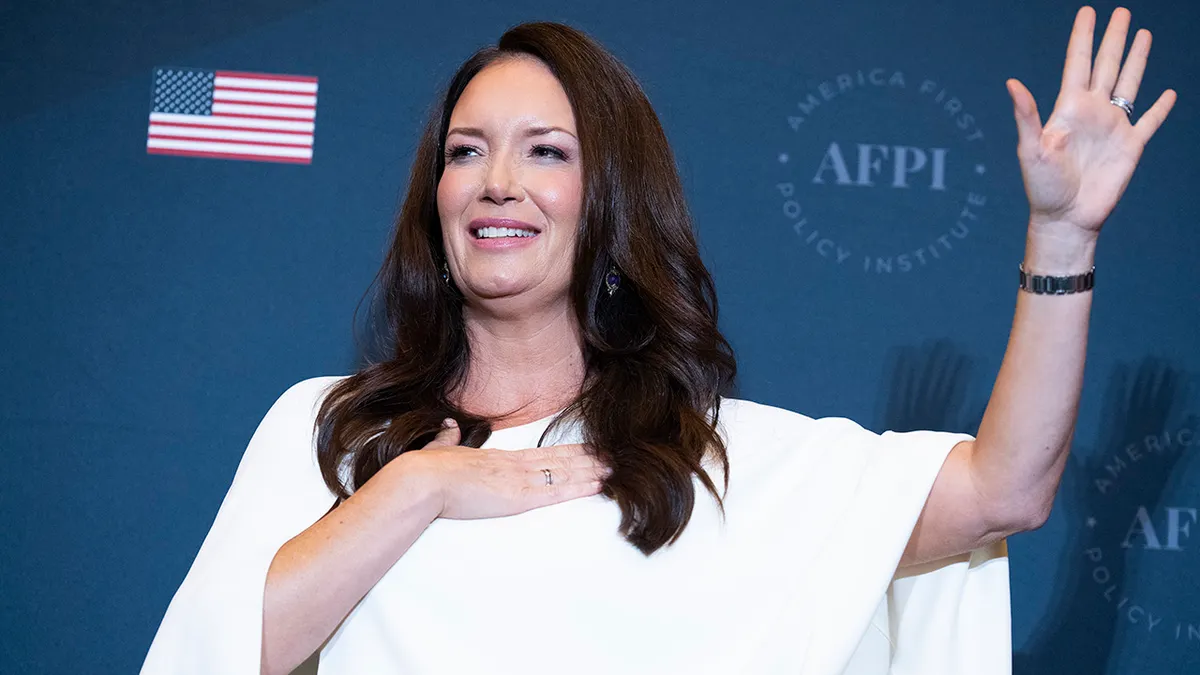
Brooke Rollins kicked off the Republican National Convention by gaslighting party loyalists with manufactured economic wins. “We now have 5 million fewer people on food stamps than we did two years ago. This is proof that we have more Americans working than ever before in the history of our country. This is what we’re fighting for every single day.” When Agriculture Secretary Brooke Rollins shared this talking point this morning while gearing up for the Midterm Republican National Convention in Dallas today, it was pitched as a triumphant victory for American prosperity. On paper, the logic sounds simple: fewer citizens enrolled in the Supplemental Nutrition Assistance Program (SNAP) must mean millions of individuals pulled themselves up “by the bootstraps”, entered the workforce, and earned enough money to buy their own groceries.
Except that is not what actually happened.
Dropping someone from a relief roll does not feed them; it simply makes their hunger invisible to federal ledgers.
Five million humans lost food assistance; those families did not suddenly become financially secure. The data shows national unemployment figures have remained largely flat over this period, completely contradicting claims of an unprecedented hiring boom, especially for Black Americans. Though representing just 13% of the U.S. population, Black Americans account for 6% of the unemployed—nearly double the national average—making them most economically vulnerable in the country.
But back to the 5 million. Who are they, and where did those five million people actually go?
The drop of over 5 million people from the Supplemental Nutrition Assistance Program (SNAP) rolls between mid-2025 and 2026—bringing total enrollment down from ~42.3 million to approximately 36.6 million—was largely driven by provisions in the One Big Beautiful Bill Act (OBBBA). These included expanding work documentation requirements to older adults (ages 55–64), narrowing dependent child exemptions, removing automatic exemptions for veterans and unhoused individuals, restricting state waivers, and barring specific groups of lawfully present immigrants.
Based on baseline SNAP participation demographics, research estimates break down the ~5 million individuals removed as follows:
| Racial / Ethnic Group | Baseline % of SNAP Program | Estimated People Removed (~5 Million Total) | Key Policy Drivers of Loss |
| White (Non-Hispanic) | ~37% – 39% | ~1.85 Million | High concentration of older adults (ages 55–64) affected by work tracking expansion and regional state administrative reviews. |
| Latino / Hispanic | ~30% – 31% | ~1.50 Million | Disproportionately impacted by immigrant eligibility exclusions, loss of state waivers in states with high Latino populations (e.g., Texas, Arizona, Florida), and uninsured rates limiting medical exemption documentation. |
| Black / African American | ~25% – 26% | ~1.28 Million | Disproportionate impact from narrowing child dependent exemptions (age threshold dropped from 18 to 14) and work rules in areas where state waivers were eliminated. |
| Asian American / Pacific Islander | ~3% – 4% | ~175,000 | Exclusions targeting lawfully present immigrants (such as refugees, asylees, and humanitarian parolees). |
| Native American / Alaska Native | ~1.5% – 2% | ~90,000 | Geographic isolation and limited access to state administrative centers needed to submit monthly 80-hour work documentation. |
Beyond race, policy groups emphasize that the 5 million people removed fall heavily into specific vulnerable age and household categories:
- Children (~1.2 Million): In states reporting child-specific data, over 1.2 million children lost benefits. This occurred primarily when parents lost eligibility due to work documentation rules or because the definition of a dependent child was narrowed from under 18 to under 14.
- Older Adults Ages 55–64 (~800,000–1 Million): Previously exempt from Able-Bodied Adults Without Dependents (ABAWD) work rules, this group was subjected to proof of 80 monthly hours of work, job training, or volunteering.
- Lawfully Present Immigrants (~90,000+): Outright eligibility exclusions were enacted for certain lawfully present refugees, asylum seekers, and survivors of human trafficking.
- Formerly Exempt Groups: Hundreds of thousands of veterans, individuals experiencing homelessness, and youth aging out of foster care lost automatic exemptions and were subjected to standard reporting rules.
Why This Narrative Is So Dangerous
Rollins’ framing accomplishes something insidious: it transforms administrative cruelty into a moral accomplishment.
- It weaponizes stigma against working families. The statement implies that anyone previously on SNAP was simply choosing not to work. In reality, the vast majority of working-age SNAP recipients already work—often holding down multiple low-wage jobs in industries that refuse to pay living wages or provide stable hours.
- It disguises a public health crisis as prosperity. Food banks and local charities across the nation are reporting unprecedented surges in demand. When federal programs cut off support, the financial burden doesn’t disappear; it gets absorbed by local emergency shelters, hospitals treating malnutrition, and struggling family networks.
- It creates a false permission structure for further cuts. By convincing the public that stripping benefits creates job growth, policymakers build political cover to gut remaining social safety nets.
Rollins lied in June in a debate with Senator Warnock when she said, “No one was kicked off SNAP.”
The bottom line is this: a healthy economy is measured by how well citizens can afford basic necessities—not by how effectively state bureaucracy can starve people off official records. This “win” that Rollins celebrated declared victory over the poor, not over poverty. Until we refuse to accept federal purge numbers as evidence of prosperity, working families will continue to pay the ultimate price.
For additional details on state-by-state SNAP participation trends and eligibility criteria, visit the official USDA Food and Nutrition Service SNAP Portal.