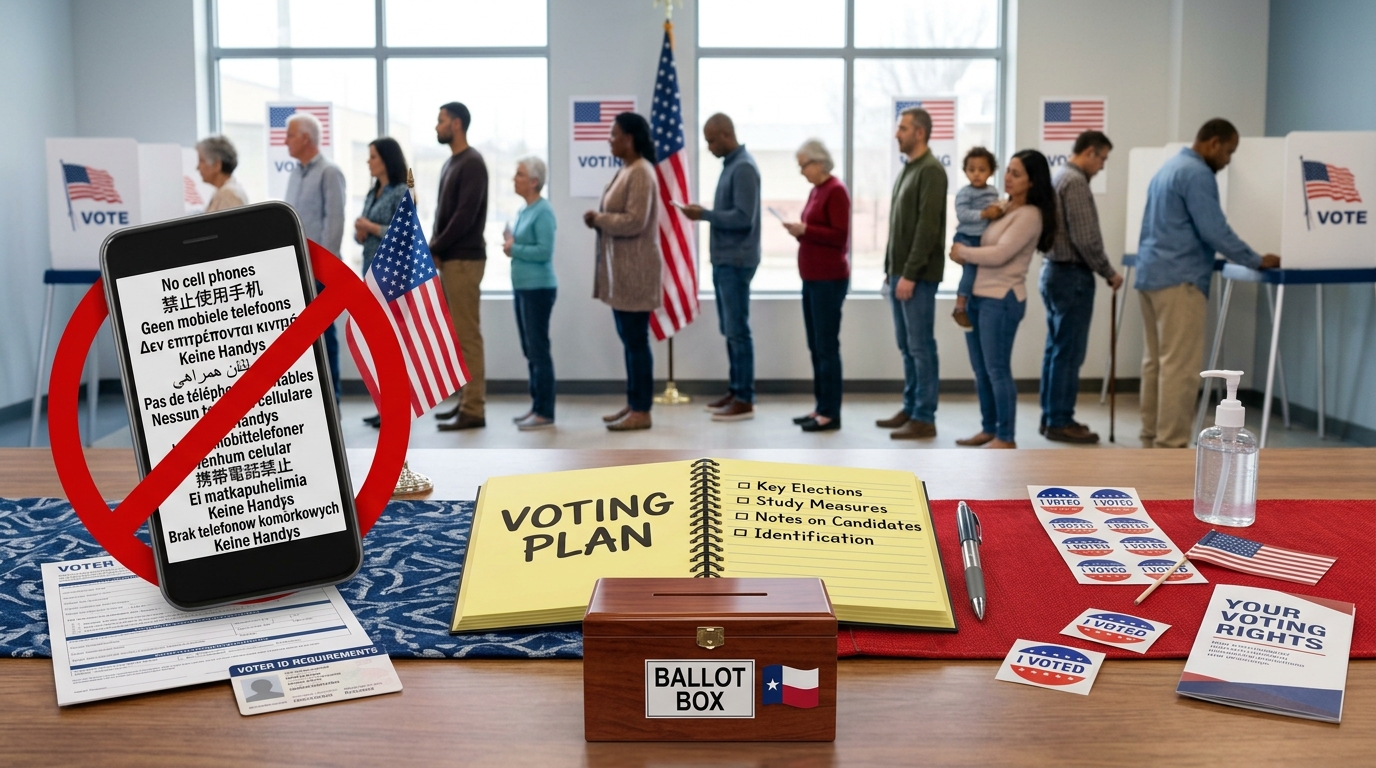
Whether you’re a first-time voter or a seasoned regular, posting a selfie with an “I Voted” sticker looks great on the timeline, but it doesn’t mean your ballot automatically made it across the finish line. Between new polling tech, late SCOTUS rulings, and misleading information circulating online, staying prepared is critical. To cut through the noise, the Texas Civil Rights Project met with local media and provided vital resources designed to protect your ballot before, during, and after Election Day.
“Our goals during this time: protecting people’s democratic right to vote safely.”
— Stephanie Drenka, Earned Media Manager, Texas Civil Rights Project
Key Texas Election Dates (2026)
Mark these official Texas voting dates & deadlines on your calendar, write them in your notebooks, and set alerts for them:
- Monday, October 5, 2026: Last day to register to vote.
- Monday, October 19 – Friday, October 30, 2026: In-person early voting period.
- Friday, October 23, 2026: Deadline to apply for a mail-in ballot or correct a defective mail-in ballot application.
- Tuesday, November 3, 2026 (Election Day): Polls open 7:00 AM – 7:00 PM. Unpostmarked mail-in ballots must be received by 7:00 PM.
- Wednesday, November 4, 2026: Postmarked mail-in ballots must be received by 5:00 PM.
- Monday, November 9, 2026: Deadline for in-person mail-in ballot curing and providing photo ID for provisional ballots.

WAIT! What about the Suspension List?
“Being on the suspense list does not cancel a voter’s registration unless they fail to respond to what’s known as a confirmation notice… and they don’t vote in two federal election cycles after being put on the suspense list.”
— Carl Blair, Senior Election Protection Attorney for the Texas Civil Rights Project
Being placed on Texas’s voter “suspense” list sounds intimidating, but it does not mean you are banned or disqualified from voting. Drawing on his extensive experience managing election protection campaigns across the state, Blair notes that a spot on the list simply means the local election office sent official mail to your registered address and it was returned as undeliverable, requiring officials to verify where you currently live. As long as you remain eligible, you can still cast a standard ballot.
To streamline your voting experience, you can verify or update your information beforehand through resources like VoteTexas.gov or your local election administrator, such as HarrisVotes. If you do not update your address prior to heading to the polls, you can complete a brief Statement of Residence form in person when you arrive.
BEFORE YOU VOTE: Verify Your Status
- Check Registration: Confirm your status online via the Secretary of State or county voter registrar (such as HarrisVotes in Harris County).
- Understanding the “Suspense” List: Remember, you remain eligible to vote by completing a Statement of Residence at the polls if you still live in the same county.
- Department of Public Safety Updates: If you registered through DPS, double-check your registration status to ensure administrative transmission backlogs were cleared.
DURING VOTING: Know the Boundaries
There are strict statutory boundaries that come along with preserving the security and privacy of your ballot:
- Dress Code: No apparel or a similar communicative device relating to a candidate, measure, or political party, regardless of whether they are on the ballot or not. Except for licensed Peace Officers, Section 46.03(a) of the Texas Penal Code prohibits a person from bringing a firearm onto the premises of a polling place.
- 100-Foot Marker (Outer Boundary): Campaigning, loitering, or electioneering is prohibited within 100 feet of a polling site entrance. Nonpartisan election monitors remain outside this line to assist voters.
- 100-Foot Voting Machine Radius (Inner Boundary): Within 100 feet of a voting machine, all cell phones, cameras, microphones, and recording devices are strictly prohibited by law.
- Language Access: All Texas counties must provide materials in English and Spanish. Major counties like Harris, Dallas, and Tarrant also provide materials in Vietnamese, Chinese, or local tribal languages.
- No Cell Phones and Other Devices: Meta Glasses, Cameras, Tablet computers, Laptop computers, Sound recorders, any other device that may be used to record sound or images. Texas has an extensive down ballot. You can bring written material for personal use only.

AFTER YOU VOTE: Canvassing and Transparency
Remember, if you encounter intimidation or any voting issues, you have rights. Election security continues long after polls close:
- Central Counting & Livestreams: Counties with 100,000+ residents are required to maintain public video livestreams of central ballot-counting areas.
- Public Canvassing: County commissioners hold open, public canvassing meetings to verify final tallies. Certification by officials is mandatory under state law.
- Hotline Support: If you encounter intimidation, long lines, or voting issues, call the nonpartisan Election Protection Hotline at 864-VOTE.
Not knowing your rights is like walking into a battle without any armor. Follow the Texas Civil Rights Project on Instagram and visit https://www.txcivilrights.org/ to learn more.