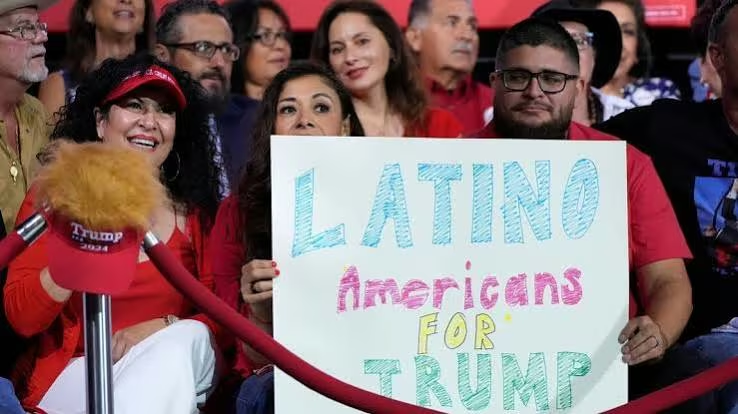
When Donald Trump won 55% of the Texas Latino vote in 2024 and flipped historic strongholds across the Rio Grande Valley, it signaled what many saw as a generational realignment of the state’s political map. That was until Trump’s promise to deport 1 million immigrants in his first year became a target of hard-working, law-abiding residents. Heading into the 2026 midterms, we are beginning to see a sharp erosion in MAGA alignment among Hispanic voters—dropping from a clear 56% majority down to just 37%—and that realignment is facing its first structural stress test.
I won Hispanics. I’ve done more than any other Republican in history. I got tremendous Hispanics.
Donald Trump, President of the United States, October 15, 2026
In Texas, where narrow statewide margins have long hinged on turnout in key border corridors, even modest defection rates combined with falling enthusiasm among young voters—where certainty to vote among 20- to 29-year-olds dropped from 50% to 38%—threaten to dismantle the Republican ground game in high-stakes races like Paxton vs. Talarico and Abbott vs. Hinojosa.
But I do think that it’s a wake-up call for Republicans to remain focused on affordability, and to come to a solution when it comes to immigration. – Monica De La Cruz, Republican U.S. Representative from Texas, November 2, 2026
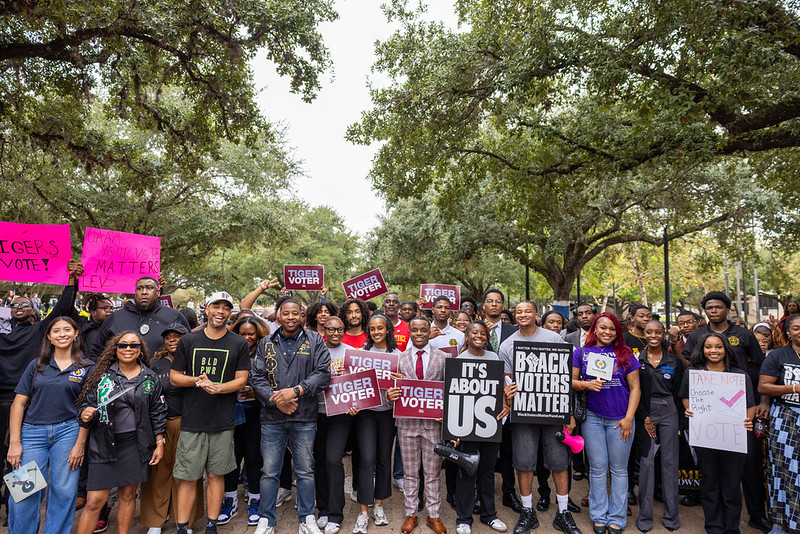
The tension grows stronger in South Texas. As grassroots organizers tour the Rio Grande Valley—a region over 90% Hispanic—early voting surges in Cameron and Hidalgo counties, up 63% over 2022, point to a mobilized electorate responding to shifting economic realities and aggressive litigation over voter access and immigration enforcement. Whether these voters return to the Democratic fold or simply sit out the cycle, the drop in MAGA identification among Hispanic Texans means the state’s political baseline is once again up for grabs.
They feel like they’ve been treated like they’re all criminals, and they’re pushing back. And I think that the Republican Party is going to pay a very deep, hard price on Tuesday. – Joaquin Castro, Democratic U.S. Representative from Texas, October 30, 2026
Latin Grammy-winning singer Bobby Pulido, the Democratic challenger in Texas’s 75%-Hispanic 15th District, is polling ahead of Republican incumbent Monica De La Cruz 51% to 44%, according to the Texas Tribune. What led to this? The Vamos a Votar organizing effort and the broader Hispanic enthusiasm surge converged on the 15th District — which Trump had won by 18 points in 2024 — making it the clearest single test of whether Latino defection from the GOP would produce actual seat changes.
Midterm Scenario Predictions
- The Rio Grande Valley Re-Flips (High Likelihood): Increased turnout in Hidalgo and Cameron counties, coupled with a 24% refusal among Hispanic Trump voters to back GOP congressional candidates, will likely push key South Texas legislative and U.S. House districts back into competitive or Democratic-leaning territory.
- Narrowing Statewide Margins (High Likelihood): While a subset of Hispanic Trump voters (65%) plan to remain with the GOP, the 11% to 24% loss of previous support will significantly shrink Republican victory margins in top-of-the-ticket contests, turning traditional red-state strongholds into tight battlegrounds on Election Night.
- Gen Z & Youth Turnout Wildcard (Moderate Likelihood): The steep drop in young voter enthusiasm (falling to 38% certainty) creates an asymmetrical turnout battle. If Democratic youth-mobilization initiatives overcome this gap, down-ballot races in urban hubs like Houston and Austin could experience unexpected shifts.
If political history and Haley Stevens’ flip-flop have taught us anything, it’s not to call the race early. We won’t know if the GOP’s reliance on the Latino vote backfired until the exit polls come in.