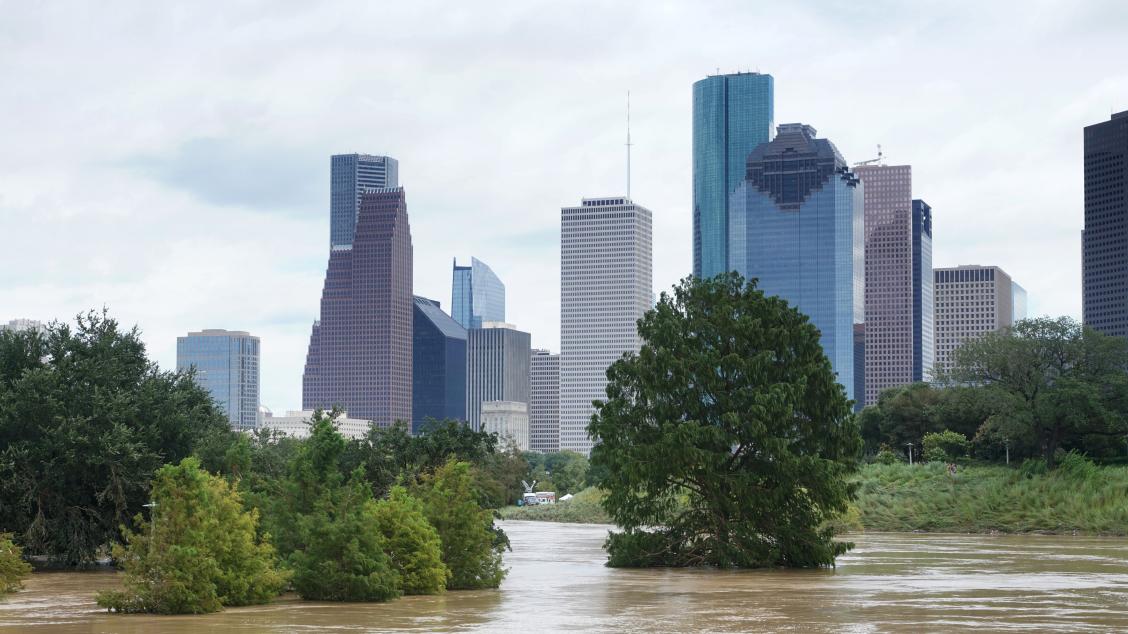
August and September are the most active months of Hurricane season, which runs from Jun 1, 2026 – Nov 30, 2026. In May of this year, NOAA predicted a 55% chance of a below-normal season. If you’ve lived in the Greater Houston area for more than a minute, you know the drill. The calendar hits June 1, TV meteorologists get energized, and suddenly your social media feeds are flooded with images of empty grocery store shelves and tracking cones.
But here is the hard truth from the people who actually run our regional emergency systems: If you are only thinking about disaster preparedness when a storm enters the Gulf, you are already behind. Right before Bertha made landfall this year, Houston Community Media held a press briefing with local officials, and nonprofit leaders met to dismantle dangerous myths about disaster recovery and equip neighborhoods with actionable resources.
“Stop thinking of preparedness as something we do for hurricane season,” says Bryan Murray, Deputy Director and Public Information Officer for the Harris County Office of Homeland Security and Emergency Management (HCOHSEM). “We live in an area that has more natural threats than almost any other in the United States… If you’re going to live in Harris County, Texas, or the Gulf Coast, this is something we do 12 months a year.”
From the 2024 derechos and Hurricane Beryl to sudden winter freezes and flash floods, our region doesn’t follow a neat six-month schedule. Whether you are a multi-generational native, a fresh transplant, or a local small business owner, surviving and recovering in Southeast Texas requires shifting from a mindset of panic to a continuous cycle of preparation.
Let’s Break It Down!
1. For the Transplants: Overcoming the Information Saturation
Welcome to Houston! If you moved here from places like the Midwest or international hubs like Brazil, the concept of a Gulf hurricane can sound less like weather and more like a sci-fi movie plot. Your biggest immediate obstacle isn’t a lack of information—it’s oversaturation. In an age of endless push notifications, algorithmic noise, and group chats, critical safety alerts easily turn into background hum.
Your Playbook:
- Create Your Own Information Flow: Actively opt into the regional communication infrastructure. Sign up for Ready Harris Alerts to get direct text and email notifications. If needed, they also provide accessible alerts in American Sign Language and Spanish.
- Map your hyper-local risks: Connect directly with the Harris County Flood Control District warning tool. Plug your specific address into their database to see exactly where nearby creeks and bayous sit, and set up alerts tailored to the water monitors closest to your home.
- Be a good neighbor: Don’t just absorb the data—amplify it. If you know your neighbors aren’t plugged into local digital channels, check on them when severe weather threatens. You never know who might have a resource that you need
2. For Native Residents: Ditch the Complacency & Audit Your Assets
To the lifelong Houstonians: yes, you survived Harvey, Ike, and Alicia. But relying on old survival stories breeds dangerous complacency. Infrastructure changes and climate shifts are rendering past survival methods ineffective for smooth sailing in the future. The biggest gap for long-term residents usually isn’t your physical supply stash—it’s your financial and insurance framework.
During recent severe freezes and storms, many local homeowners discovered too late that their basic insurance packages contained severe sub-limits or massive deductibles. A standard 3% deductible on a $300,000 Houston home means you are paying $9,000 out of pocket before your coverage kicks in.
Your Playbook:
- Conduct an annual insurance audit: Call your agent—don’t just manage it via an app. Confirm exactly what your policy covers for windstorm, hail, and burst pipes. Remember that standard homeowners insurance does not cover rising flash flood waters; a separate flood policy is an absolute must.
- Go Bags: Disaster Preparedness or “Go Bags” are a must. Everyone in your family should have their own Go Bag that contains 72 hours’ worth of essential supplies. Here’s what should be in it:
📚 Communication Supplies
Emergency contact list featuring local congregation elders and family numbers
Paper and pencils to write notes or log information just in case phones and tablets fail.
🩹 Medical & Personal Identification
Waterproof container holding required prescription medications and copies of prescriptions.
First-aid kit along with a medical directive card (DPA) or important health documents
Cash and credit cards stored safely
Copies of personal documents like photo IDs, insurance policies, and passports
Extra keys for your house and vehicle.
💧 Sustenance & Tools
Bottled water and lightweight, nutrient-dense non-perishable foods (like protein bars)
Manual can opener, pocket tool set, or utility knife
Flashlight or headlamp with extra batteries (or a hand-crank style)
Radio that operates via battery or wind-up mechanics
Whistle used to signal for help if trapped
Waterproof matches or a lighter.
🧥 Clothing & Shelter
Complete change of warm clothes including layers and extra socks
Sturdy shoes or hiking boots to protect your feet from debris
Blankets or compact emergency space blankets
Dust masks, heavy waterproof tape, and plastic sheeting for improvised shelter.
🧼 Hygiene & Sanitation
Soap, towels, toothbrushes, and toothpaste
Toilet paper and moist wet wipes
Hand sanitizer and garbage bags for personal waste.
👶 Special Needs (If Applicable)
Child-care supplies like diapers, formula, and small games or books
Senior care gear or specialized items for disabled household members
Pet supplies including food, a leash, and water for family animals.
- Understand the true role of FEMA: Federal emergency management is designed for basic stabilization, not comprehensive property replacement. The average individual assistance payout from FEMA sits around $7,000—a drop in the bucket for major structural damage. True long-term recovery is driven by your private insurance and localized non-profit networks. Also, this Administration has tampered with FEMA so we’re not sure if any “recovery funds” will be available.
3. For Small Businesses: Building Operational Continuity
When the grid goes down, small businesses face a double crisis: physical property damage and catastrophic revenue halts. Protecting your operations requires a specialized blueprint distinct from household planning.
Your Playbook:
- Bookmark the right toolkits: Avoid rebuilding the wheel during an emergency. The State of Texas, in partnership with Texas Mutual and Texas State University, maintains a dedicated, comprehensive resilience portal: BeforeDuringAfter.com. Use this site to download operational readiness roadmaps, employee communication templates, and step-by-step continuity checklists.
- Tax-Free Emergency Weekend: In Texas, the Emergency Preparation Supplies Sales Tax Holiday takes place annually in late April. It runs from Saturday morning through Monday midnight on the late April weekend designated by the Texas Comptroller. It applies to qualifying emergency preparation supplies purchased at any retail business in Texas. Although 2026 has already occurred April 25–27, 2026, be sure to mark your calendar for late April 2027 for the next occurrence!
| Price Limit | Qualifying Items |
| Less than $3,000 | • Portable generators |
| Less than $300 | • Hurricane shutters • Emergency escape ladders |
| Less than $75 | • Household batteries (AAA, AA, C, D, 6V, 9V) • First aid kits • Flashlights, lanterns, and candles • Mobile phone chargers and power banks • Portable self-powered/weather radios • Smoke detectors & Carbon monoxide detectors • Fire extinguishers • Non-electric coolers and ice chests • Fuel containers • Tarps and plastic sheeting • Non-electric can openers • Ground anchor systems and tie-down kits • Axes and hatchets |
- Leverage federal lending programs: If your business sustains physical or economic injury, prioritize applying for a Small Business Administration (SBA) disaster loan. These federal loans frequently offer incredibly low interest rates (often between 1% and 4%) extended over a 30-year term—providing the vital liquidity needed to rebuild storefronts and retain staff.
The Post-Disaster Lifeline: Dial 2-1-1
If the worst happens and you find yourself facing immediate vulnerabilities, your first point of contact should be 2-1-1.
Managed locally by the United Way of Greater Houston, this 24/7/365 verified database serves as the centralized clearinghouse for food distribution, emergency utility assistance, mental health services, and temporary shelter.
When major regional disasters hit, the Greater Houston Disaster Alliance—a core philanthropic partnership between the United Way of Greater Houston and the Greater Houston Community Foundation—collects and deploys localized grants directly to vetted boots-on-the-ground non-profits. By dialing 2-1-1 and providing your zip code, you are instantly matched with real-time, active relief programs deployed directly into your neighborhood.
Disaster preparedness along the Gulf Coast isn’t a seasonal chore you can check off your list in June. It is a continuous, 12-month commitment to protecting your family, your neighbors, and the local economy. Download your household plans, audit your insurance paperwork, and get plugged into our regional alert networks today.
You can download the Household Disaster Preparedness Plan directly from the United Way of Greater Houston website on their dedicated United We Prepare portal.
To make the resource accessible to the region’s diverse population, the printable and fillable guide is translated into 11 languages:
Currently, There are no tropical cyclones in the Atlantic at this time. There are no tropical cyclones in the Eastern Pacific or Caribbean at this time. Native Houstonians, Transplants, Business owners, Gulf Coasters, and more should use this time to prepare and/or update their Disaster Preparedness routine.