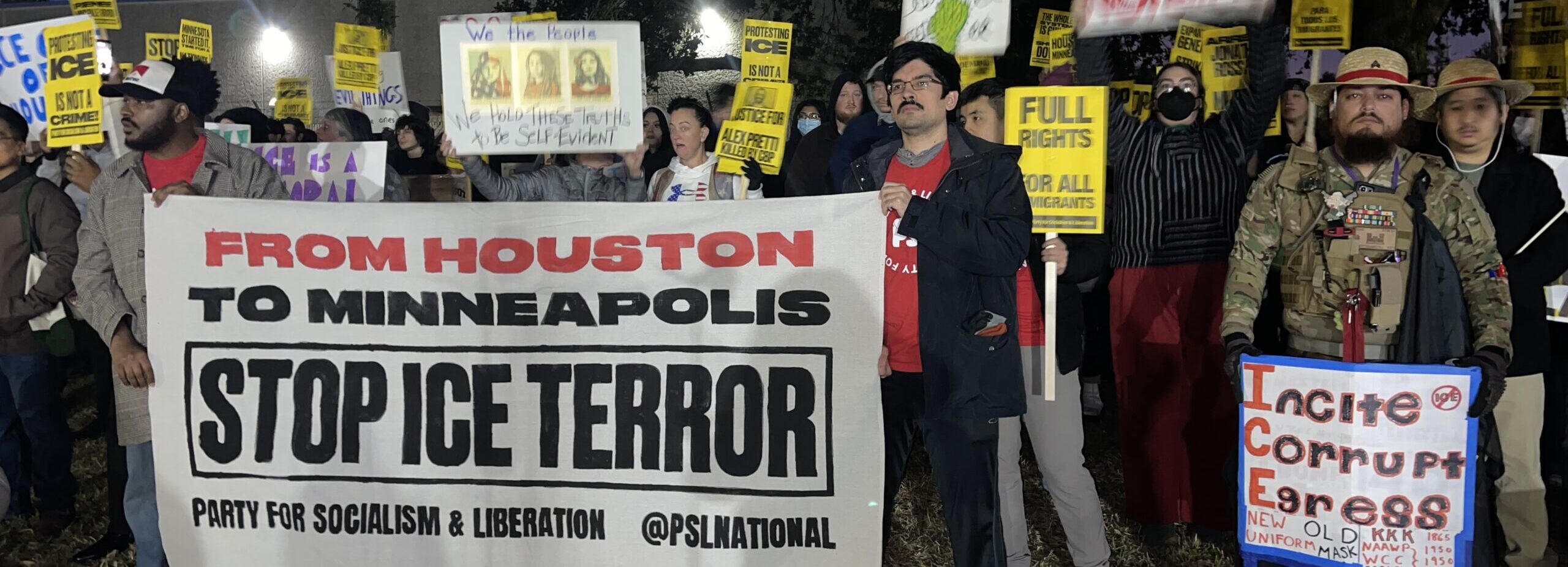
Social media has been flooded with claims that the crowds protesting in Minnesota were nothing more than hired hands—actors in a manufactured drama. Where did they get their information? “The thugs that are protesting include many highly paid professional agitators and anarchists,” the 47th President said Jan. 18 on Truth Social. Two days later, as protesters grew in number, he doubled down on that statement. “They’re paid agitators and insurrectionists,” he said at a Jan. 20 press conference. After Alex Pretti was Unalived on January 24th, multiple protests broke out in cities across the states, including my hometown of Houston, Texas. Of course, I was on the ground. I didn’t just watch; I walked the line, looked into the eyes of the people behind the signs, and asked the questions that simple headlines ignore. What I found wasn’t a payroll—it was a community in pain.

The Faces Behind the “Paid” Rumor

The “paid protester” narrative dissolves the moment you meet someone like Mariah. A 14-year-old middle schooler, sister, and granddaughter, Mariah, stood shivering in the biting air, rubbing her hands together for warmth while shouting “ICE OUT.” Critics might point to the professionally printed banner she held—emblazoned with her grandparents’ non-profit logo—as “proof” of a funded agenda. But Mariah wasn’t there for a paycheck; she had jumped straight from her school bus into the car to join her family’s mission of keeping parents and children together. “I’m old enough now to see what displacement does to entire communities,” she said. “I saw what happened in Minnesota, and it’s horrifying. Enough is enough, people need to unify because a people united can never be defeated.”
The “what happened” she’s referring to is the catalyst for this national “ICE Out” movement: the deaths of Renee Good and Alex Pretti at the hands of federal agents in Minnesota. The ripple effect of those deaths reached Houston’s North Export Drive with a vengeance.
What about Jackie? A 38-year-old black hair stylist, who didn’t want to be photographed or on camera, but wanted to make sure her statement was documented. Surely she was being paid as the algorithm is pushing that the “92%” (Black women who voted for Kamala) were on an emotional leave. “Getting paid?! I am MISSING money,” she shouted. “It’s a Friday night, and I’m out here because black people have been enduring this same type of trauma since 1619. You might not see a lot of us out here because, yes, some of us do need a break, but we are also still fighting our own battles, and people don’t really show up for us like we show up for them. Renee Good and that white man’s [Alex Pretti] GoFundMe has passed 1 million, but what about Keith Porter? He has just passed 100k. All of us are being affected. When we sit back and divide ourselves, we make it easier for them to take a bite at us.”
Although that would be the only time I heard Keith Porter’s name that night, there were a large number of black Americans who stood in solidarity and protested. Jackie held a piece of repurposed Amazon cardboard with “People over Politics” written in black Sharpie. “They say we are paid?” Jackie laughed, though it sounded more like a sigh. “I can’t believe that [explative]”.

The “Receipts” of Reality
If these were “paid actors,” they were doing a poor job of following a script. I profiled three distinct groups that made up the bulk of the crowd:
- The Students: Dozens of Conroe High School students led a walkout earlier that afternoon, some eventually merging with the crowd at CoreCivic. I spoke with a 17-year-old named Leo, who told me his “compensation” was a Saturday detention or maybe even suspension. “We aren’t here for money,” he said. “We’re here because we’re tired of being afraid.” His anonymous friend added, “Yes, immigrants built this country, and we haven’t even gotten paid for that.” Conroe wasn’t the only high school to walk out. High Schools across Texas, including Crockett High in Austin, walked out last Friday. Resulting in the Texas Education Agency warning school leaders Tuesday that it could sanction educators who help students leave class for political activism or take interventions against school districts that don’t follow state attendance requirements.
- The Local Organizers: Groups like FIEL Houston and WooriJuntos were present, but their “funding” consists of community donations and tireless volunteer hours. These aren’t shadow corporations; they are immigrant-led civil rights organizations that have been in the Houston trenches for years. When people ask, “Why don’t immigrants do it the ‘right way’, this is what these organizations help with.
- The Community: The protesters I spoke with spanned the entire social spectrum. There were nurses, plant workers, and students; every corner of the community was represented. The diversity was striking: I met a woman who introduced herself as an ‘angry white woman from a conservative community,’ and a politician running for Congress who was ‘pissed off.’ From business owners to educators, the message was clear—this frustration belongs to everyone.
Why They Propose

The motivation isn’t a check—it’s a check on power. Following the “Operation Metro Surge” in the Twin Cities, where federal agents were accused of racial profiling and assault, Houstonians are hyper-aware. They aren’t protesting a theory; they are protesting a trend.
They are protesting for Alberto Castaneda Mondragon, who remains in a Minneapolis hospital with a shattered skull while ICE claims he “ran into a wall.” People are tired and angry. Almost everyone I spoke to last Friday night, via anonymously, on my TikTok Live, or recorded, stated their statement off with “I’m angry”, “I’m mad”, or “I’m pissed off”. They ended their statements with “I wish I were getting paid because nothing is affordable now.”
The Verdict
In Houston last Friday, the only thing “green” about the protest was some of the signs the protesters were holding. The people weren’t “actors.” They were neighbors. They were nurses. They were students. And their presence was paid for in the most expensive currency we have: their time, their safety, and their hope for a different future.